%2Ffit-in%2F250x250%2Fusers%2F2018a92c-74d2-43d3-8914-d62ae3ab6710%2Fimages%2F279eebaf-167c-4ccf-80c3-0ada1212c91c.jpg&w=1920&q=100)
King Mackerel Fishing Charter in Barnstable MA
Mackerel Fishing in Barnstable - What to Expect
%2F%2Fusers%2F2018a92c-74d2-43d3-8914-d62ae3ab6710%2Fimages%2Fbarnstable-mackerel-fishing-catch-2648.jpg&w=1920&q=75)
Fishing Charter by Captain Jarred Bolduc in June

- Annie Bee Sportfishing is the charter for you!


Summary
Join a fishing charter with Captain Jarred Bolduc of Annie Bee Sportfishing on Thursday, June 19 in Barnstable, MA. This guided fishing trip targets King Mackerel, Atlantic Mackerel, and Chub Mackerel in Cape Cod waters, offering anglers the chance to understand these species' behavior and habitat while developing their offshore fishing skills.
Fishing Charter with Captain Jarred Bolduc - Rates & Booking
Captain Jarred Bolduc of Annie Bee Sportfishing in Barnstable, MA operates a dedicated fishing charter targeting mackerel species in Cape Cod waters. For specific details about trip duration, guest capacity, included gear, tackle, and current pricing, contact Annie Bee Sportfishing directly or request a rate quote through the booking system.
This fishing charter emphasizes hands-on instruction and species-specific techniques. Captain Jarred's local expertise in Barnstable waters ensures you fish proven locations where mackerel congregate. All necessary fishing expertise and local knowledge are included to help maximize your catch and understanding of these fish.
Highlights of This Mackerel Fishing Experience
Fishing for King Mackerel, Atlantic Mackerel, and Chub Mackerel in Cape Cod waters provides distinct challenges and rewards. Each species exhibits unique behavior patterns and responds differently to presentations, making this a multi-species learning opportunity. The variety keeps the day dynamic and tests different aspects of your angling ability.
Cape Cod's productive waters support healthy mackerel populations year-round. The offshore and nearshore environments where these fish live create exciting fishing conditions with consistent action. Working with an experienced captain who understands local migration patterns and seasonal feeding habits dramatically improves your success rate and fishing knowledge.
Local Species Insights: King Mackerel, Atlantic Mackerel, and Chub Mackerel
King Mackerel are apex predators in Atlantic waters, known for aggressive strikes and powerful runs that test your equipment and technique. These fish are built for speed and strength, with streamlined bodies and sharp teeth that demand respect during handling. King Mackerel hunt baitfish in mid-water columns and near structures, responding to fast-moving lures and live bait presentations. Understanding their feeding windows and depth preferences is key to consistent hookups.
Atlantic Mackerel are smaller, schooling fish with distinctive patterns of dark bars along their sides. They're incredibly fast and efficient hunters, often found in schools that can be pinpointed on fish finders. These fish are more abundant in Cape Cod waters and provide high-volume action. Their speed requires using appropriate tackle and techniques to detect strikes quickly. Atlantic Mackerel willingly chase small spoons, jigs, and live bait, making them excellent targets for developing casting and retrieval skills.
Chub Mackerel occupy a middle ground in size between Atlantic and King Mackerel, displaying behavior influenced by both species. They school with Atlantic Mackerel and respond to similar presentations, though they inhabit slightly different depth ranges. Chub Mackerel are distinguished by their body shape and coloration patterns, and catching them alongside Atlantic Mackerel helps you develop species identification skills on the water.
All three species prefer cooler water temperatures and are most active during spring through fall months. They're built for open water hunting, with keen eyesight and lateral line systems that detect vibrations and movement from considerable distances. Mackerel feed on small baitfish including sand eels, silversides, and anchovies. On this charter, you'll learn how to match your presentations to available forage and adjust techniques based on water conditions, season, and daily feeding activity.
Cape Cod's position on the Atlantic coast creates unique migratory corridors where these mackerel species concentrate. The combination of coastal geography, water temperatures, and baitfish availability makes this region a reliable destination for mackerel fishing. Fishing with Captain Jarred gives you access to local knowledge accumulated through seasons of observing these patterns.
Plan Your Mackerel Fishing Day
Contact Annie Bee Sportfishing to confirm trip details including departure time, duration, what tackle and gear are provided, and what you should bring. Charter fishing in Cape Cod waters requires appropriate clothing for marine conditions, including layers and sun protection. Follow all captain's instructions regarding safety equipment and onboard procedures. Most mackerel charters depart early to maximize fishing time during peak feeding periods, so plan for an early morning start.
Fishing in Cape Cod: Chub Mackerel, King Mackerel and Atlantic Mackerel
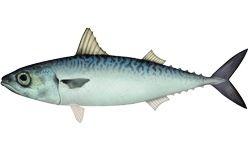
Chub Mackerel Overview
The chub mackerel (Scomber Japonicus) is a sleek, fast-swimming member of the Scombridae family, part of the order Perciformes, known for its distinctive wavy blue lines and energetic behavior in coastal and offshore waters. Found abundantly near California and Mexico, this fish is prized by anglers for its spirited strikes and excellent table quality. Often called the "hardhead" by local fishermen, the chub mackerel has fascinated humans for millennia—fossils dating back 2.2 to 3 million years have been discovered in Italy, testament to this species' ancient lineage.
Chub Mackerel Habitat and Distribution
Chub mackerel are widely distributed throughout the Indo-Pacific region, with native populations spanning from southeastern Alaska down the eastern Pacific coast to Mexico. These saltwater inhabitants thrive in subtropical marine environments, typically found at depths ranging from 164 to 656 feet, usually about 20 miles offshore in temperatures between 50 and 72 degrees Fahrenheit. Juveniles congregate around sandy-bottomed shores and kelp beds, while adults prefer deeper, cooler waters during winter months. The species is highly gregarious, schooling by size and often mixing with jack mackerel and sardines. In California, these fish are particularly common south of Point Conception and around Monterey Bay, making iconic piers like Newport Pier, Imperial Beach Pier, and Redondo Sportfishing Pier prime fishing destinations.
Chub Mackerel Size and Weight
Chub mackerel typically reach lengths of 8 to 14 inches on average, though they can grow considerably larger under ideal conditions. The maximum recorded size reaches approximately 25 inches in length, with weights approaching 6 pounds. Most anglers encounter fish in the 2 to 4-pound range. The IGFA All-Tackle world record stands at an impressive 4 pounds 12 ounces, achieved in Mexican waters back in 1986. These fast-growing fish reach sexual maturity by age four and can live up to 18 years in the wild.
Chub Mackerel Diet and Behavior
Young chub mackerel begin their dietary journey feeding on copepods and rotifers during the larval stage, transitioning to zooplankton as juveniles. Adult fish are nocturnal hunters, actively feeding in open waters on small shrimps, amphipods, salps, larvacea, and krill. These aggressive predators have earned their "hardhead" nickname through their bold, persistent feeding behavior. Notably, they're known to consume the young of their own species as well as other fish such as anchovies, sardines, and herring, making them efficient hunters in their ecosystems. Their wavy blue lines serve as effective camouflage, mimicking sunlight patterns on the water's surface and helping them evade larger predators like yellowfin tuna and seabirds.
Chub Mackerel Spawning and Seasonal Activity
Spawning behavior in chub mackerel varies by geographic location. Near Asian waters, reproductive activity occurs from March through October, while in California, spawning takes place between April and September. These fish spawn in groups throughout their active season, with year-round reproduction possible depending on location and water conditions. As cooler months approach, chub mackerel migrate to deeper offshore waters where they remain relatively inactive, conserving energy during temperature drops. This seasonal movement pattern makes timing crucial for both recreational and commercial anglers targeting this species.
Chub Mackerel Techniques for Observation and Capture
Light Tackle Spinning: Chub mackerel are notorious for being easy to catch and highly responsive to ultralight spinning rigs. Use a medium to light action spinning rod with 12 to 15-pound test line and a #2 to #4 hook rigged with a small split shot sinker. This setup allows you to feel every aggressive strike these fish are famous for delivering. Cast near structure and let the line sink briefly before initiating a medium-speed retrieve—chub mackerel typically strike on the upstroke as bait approaches the surface.
Live and Cut Bait Methods: Strip baits work exceptionally well for chub mackerel. Fresh mackerel strips, squid, or live anchovy are top choices that consistently produce hookups. The key is maintaining constant motion; cast out your rigged bait and retrieve steadily rather than allowing it to sit motionless. These fish hunt by movement detection, so keep the bait animated. Around Newport Pier in California, anglers report excellent success using this method during peak seasons from July through November inshore and March through May offshore.
Artificial Lures and Flies: Small soft synthetic lures and bright flies excel when targeting schooling chub mackerel. Bucktails, mackerel jigs, and roostertail spinners trigger aggressive strikes, particularly in areas where dense schools congregate. Cast into schools and retrieve with quick, erratic movements to mimic injured prey. The visual attraction of these lures combined with vibration makes them ideal for locating and catching multiple fish in succession.
Chub Mackerel Culinary and Utilization Notes
Chub mackerel earns its "Excellent Odds" food quality rating deservedly. These fish provide delicious, flavorful white to pinkish meat with a moderate fat content that cooks beautifully whether grilled, pan-seared, baked, or smoked. The majority of recipes featuring chub mackerel originate from Indonesia and nearby Southeast Asian regions, where the species has been a dietary staple for centuries. Beyond culinary appeal, this fish holds cultural significance—it's considered kosher according to Jewish dietary law and has been utilized in traditional Chinese medicine for its nutritional properties. The species is sustainable and abundant, making it an excellent choice for environmentally conscious diners seeking quality seafood without guilt.
Chub Mackerel Frequently Asked Questions
Q: What is the best bait for catching chub mackerel?
A: Fresh mackerel strips, live anchovy, and squid are top bait choices. Keep the bait in constant motion through steady retrieval rather than allowing it to rest on the bottom. The chub mackerel hunts by detecting movement, so animation is critical to success.
Q: Where can I find chub mackerel near California?
A: Look for these fish along the California coast south of Point Conception and around Monterey Bay. Prime fishing locations include Newport Pier, Imperial Beach Pier, Redondo Sportfishing Pier, Stearns Wharf, and Monterey Wharf #2. Inshore populations peak from July to November, while offshore fishing is best March through May.
Q: Is chub mackerel good to eat?
A: Absolutely. Chub mackerel offers excellent culinary value with flavorful, moderate-fat meat that suits grilling, pan-searing, baking, or smoking. The species is considered kosher and has been used in traditional medicine for its health benefits. It's a sustainable seafood choice popular in Southeast Asian cuisine.
Q: When is the best time to catch chub mackerel?
A: Inshore populations are most abundant from July through November, making this the prime season for pier and nearshore fishing. For offshore expeditions, target March through May when fish move to deeper waters. In general, chub mackerel are most active during cooler morning and evening hours, with night feeding being particularly productive.
Q: What tackle should I use for chub mackerel?
A: A medium to light action spinning rod with 12 to 15-pound test line is ideal. These fish are easy to catch and will strike ultralight rigs (4-pound test), but medium power gives you better control and durability for multiple fish. Use #2 to #4 hooks with small split shot sinkers for optimal presentation.
Q: Why do chub mackerel have those wavy blue lines?
A: Those distinctive wavy or zigzagging lines serve as camouflage, mimicking the pattern of sunlight filtering through water. This coloration helps the fish evade predators like yellowfin tuna and seabirds, making it less conspicuous in their natural marine environment.
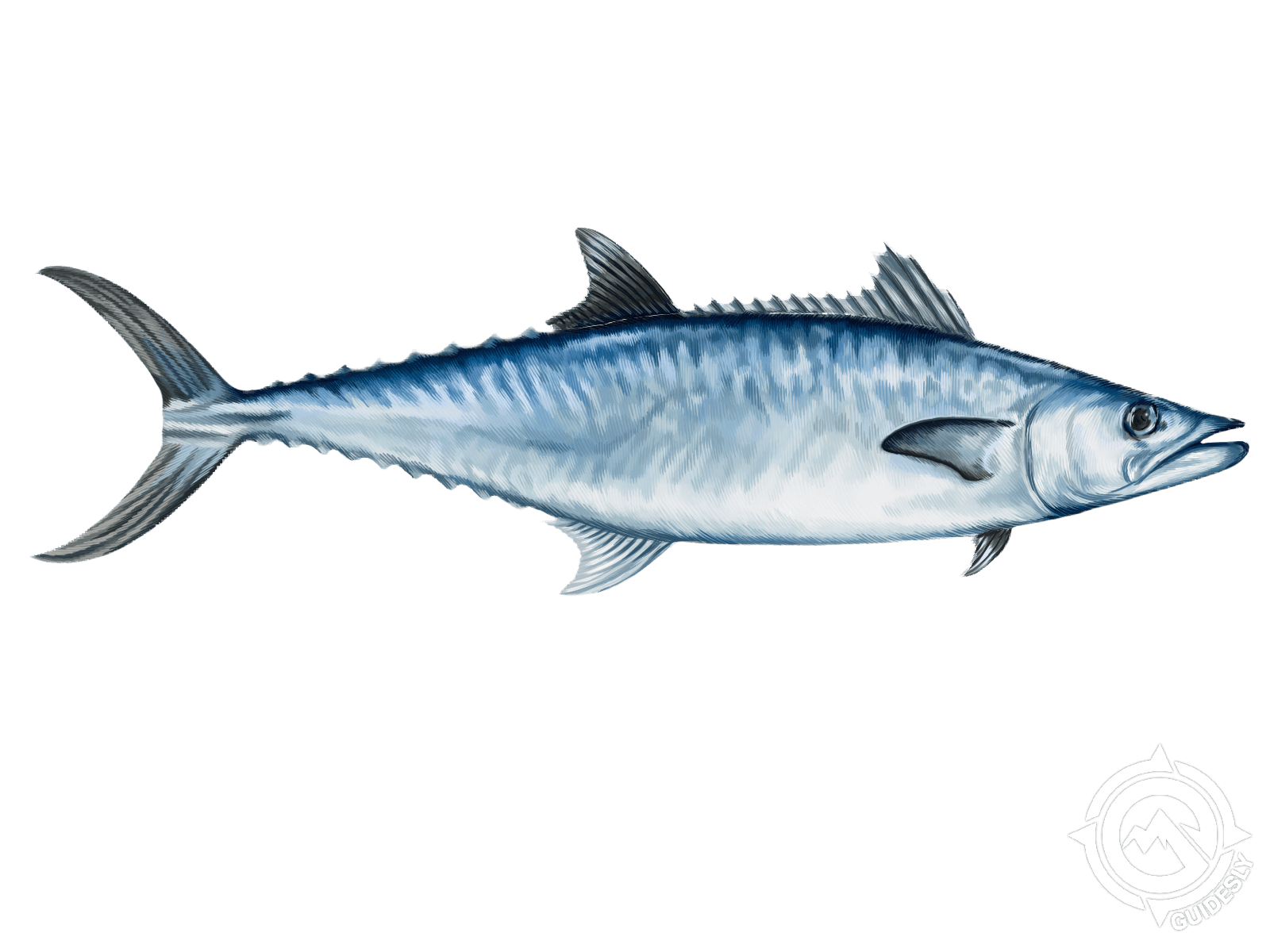
King Mackerel Overview
The King Mackerel (Scomberomorus cavalla) is a prized saltwater gamefish belonging to the family Scombridae and order Perciformes. Also known as Kingfish or Spanish Mackerel, this migratory powerhouse is famous among anglers for its lightning-fast runs and aggressive strikes. What makes the King Mackerel instantly recognizable are its small, loosely attached scales covering an olive-green back that contrasts beautifully with a silvery-white belly and shimmering, rosy iridescent sides. Younger specimens sometimes display brownish or yellowish spots on their flanks. Native to subtropical waters, King Mackerel are found throughout the Atlantic Coast and Gulf of Mexico, with particularly strong populations near North Carolina and Brazil. If you've ever chased a silver bullet through the water off the coast, chances are you've tangled with one of these magnificent fish.
King Mackerel Habitat and Distribution
King Mackerel are subtropical specialists that thrive in warm Atlantic and Gulf waters, ranging from the Gulf of Maine down through North Carolina, the entire Gulf of Mexico, and extending to Brazil—especially around Rio de Janeiro where they're incredibly abundant. These fish are also found in the Bay of Bengal and throughout the Indian Ocean and Arabian Sea. They prefer depths between 40 and 150 feet during normal conditions, though larger specimens often venture inshore to harbors and inlet waters as deep as 590 feet. Water temperature is crucial to their distribution; they're most active and concentrated in waters ranging from 68 to 84°F. Understanding these depth and temperature preferences is essential for anyone planning a King Mackerel fishing adventure along the Atlantic coast.
King Mackerel Size and Weight
King Mackerel are considered medium-sized fish, with a typical size range of 19 to 72 inches in length. Most caught specimens weigh between 10 and 20 pounds, though specimens commonly reach 30 pounds, and trophy-sized individuals have exceeded 90 pounds. An interesting biological detail: females significantly outweigh males at the same age. For example, a seven-year-old female King Mackerel might tip the scales at 22 pounds, while a male of identical age weighs only about 11 pounds. This sexual dimorphism in growth rates makes trophy hunting for larger specimens a realistic goal for dedicated anglers in coastal regions from North Carolina to Texas.
King Mackerel Diet and Behavior
As an opportunistic carnivore with an almost legendary voracious appetite, the King Mackerel is an aggressive hunter that feeds on a varied menu depending on seasonal availability. Their diet includes Blue Runner, Northern Mackerel, Striped Anchovy, Weakfish, Cutlassfish, Jack, Menhaden, and squid. What makes these fish particularly thrilling for anglers is their explosive feeding behavior—they're known to strike with extreme aggression and make blistering runs that can strip line from even well-spooled reels. Their teeth are notably similar to those of Bluefish, making them formidable predators capable of inflicting serious damage to bait and lures alike. King Mackerel behavior varies seasonally with water temperature and bait availability; they're most active when waters warm and migratory baitfish move through their territories. Their speed is legendary and matched only by the Wahoo, their distant relative, making them one of the most exciting gamefish to pursue.
King Mackerel Spawning and Seasonal Activity
King Mackerel are broadcast spawners, releasing sperm and eggs into the water column where fertilization occurs by chance. One of the most remarkable aspects of their reproductive biology is the incredibly short incubation period—fertilized eggs hatch in less than a day! This rapid development strategy allows populations to capitalize on favorable feeding conditions. Their migratory patterns are closely tied to water temperature; as coastal waters warm in spring and early summer, King Mackerel move northward and into shallower waters, creating peak fishing opportunities. As fall arrives and water temperatures drop, they migrate southward to warmer Gulf waters and deeper offshore zones. Understanding these seasonal movements is critical for planning successful fishing trips, whether you're targeting them off North Carolina in summer or pursuing Gulf populations in winter.
King Mackerel Techniques for Observation and Capture
Trolling with Large Lures: The most effective method for King Mackerel involves trolling at speeds between 8 and 12 knots using large planers, heavy tackle rated for 30- to 50-pound test, and vibrant artificial lures in silver, chartreuse, or blue patterns. Trolling depths of 40 to 150 feet are ideal in most locations. Around North Carolina's Outer Banks, summer trolling from June through August produces consistent strikes as migratory populations move through these rich fishing grounds.
Live Bait Rigging: If live bait is your preference, use a strong metal leader and tie two hooks to maximize your chances. Attach the first hook (single or treble) through the live bait's mouth and nose, then place a second treble hook through the back or allow it to dangle freely. This rigging strategy accounts for King Mackerel's tendency to bite at the rear section of baitfish first. Live mullet, mackerel, and herring work exceptionally well and trigger aggressive strikes.
Jigging and Wreck Fishing: Vertical jigging over reefs, wrecks, and deep structure with metal jigs (2 to 4 ounces) is a highly productive approach, particularly in offshore zones. Drop your jig to structure, then employ aggressive jigging motions with rapid rod snaps. This method concentrates effort in high-probability zones and produces strikes from feeding fish holding in deeper water or around cover.
King Mackerel Culinary and Utilization Notes
King Mackerel has grayish flesh with relatively high fat content and was only marketed fresh commercially beginning in 2005. While the fish is edible, potential consumers should be aware that King Mackerel accumulates significant mercury levels—alongside Tilefish, Shark, and Swordfish—making it advisable for children and pregnant women to avoid or strictly limit consumption. For anglers who choose to keep their catch, the grayish meat is best prepared fresh and suited to grilling, baking, or smoking. The high oil content makes it forgiving to cook and provides good flavor when properly prepared. Many recreational anglers practice catch-and-release to preserve populations and avoid mercury exposure concerns while still enjoying the thrilling fight these powerful fish provide.
King Mackerel Frequently Asked Questions
Q: What is the best bait or lure for catching King Mackerel?
A: Live bait such as mullet, mackerel, and herring work exceptionally well when rigged on metal leaders with double hooks. For artificial lures, large spoons, plugs, and jigs in silver, chartreuse, or blue patterns fished on heavy 30- to 50-pound tackle produce consistent results. Trolling these artificials at 8 to 12 knots is the most popular method among experienced anglers.
Q: Where can I find King Mackerel near major coastal cities?
A: King Mackerel are abundant throughout the Atlantic Coast from Texas to North Carolina, with prime populations in the Gulf of Mexico and nearshore waters. Summer months bring them northward; the Outer Banks of North Carolina hosts excellent populations June through September. Gulf ports in Texas and Florida offer year-round opportunities, particularly in the deeper channels and offshore zones.
Q: How do I distinguish a King Mackerel from a Spanish Mackerel or Cero?
A: The key distinguishing feature is the lateral line pattern. On King Mackerel, the lateral line runs along the body but stops abruptly around mid-body. In contrast, Spanish Mackerel and Cero species have lateral lines that slope gradually downward from the gill cover all the way to the tail. Additionally, King Mackerel typically grow larger and have larger teeth relative to their cousins.
Q: Is King Mackerel good to eat?
A: King Mackerel has flavorful, oily flesh that takes well to grilling and smoking. However, be aware that this species accumulates mercury at concerning levels. The FDA recommends that children and pregnant women avoid consumption. For others, occasional consumption of fresh King Mackerel is generally considered acceptable, though catch-and-release is increasingly popular to preserve populations and avoid potential health concerns.
Q: When is the best time to catch King Mackerel?
A: The prime fishing season varies by location. Along the Atlantic, late spring through early fall (May through September) offers the most consistent action as water temperatures warm and fish move northward. In Gulf waters, December through March provides excellent opportunities as fish congregate in deeper, warmer zones. Early morning and late afternoon typically produce the most aggressive feeding.
Q: What tackle and equipment do I need for King Mackerel fishing?
A: Use heavy-duty saltwater rods rated for 30- to 50-pound test line paired with multiplier reels capable of holding 300+ yards of backing. A strong metal leader (60- to 100-pound test) is essential, as King Mackerel possess teeth similar to Bluefish and will bite through monofilament instantly. Incorporate quality ball bearings and swivels into your rigging to reduce line twist during trolling operations.

Atlantic Mackerel Overview
The Atlantic Mackerel (Scomber scombrus) is a sleek, fast-moving member of the Scombridae family within the order Perciformes, and it's one of the most exciting fish to encounter in temperate Atlantic waters. Known for their metallic-blue to green backs adorned with distinctive wavy vertical bars, these fish transition to silvery sides and white bellies, making them instantly recognizable when they're fresh from the water. What truly sets them apart is their incredible speed—they can swim at impressive velocities and are famous for forming massive schools that stretch for miles, sometimes reaching into the hundreds or thousands of individuals. They're highly migratory, which means they're not always in the same spot, but when you find a school, you've hit the jackpot for an unforgettable fishing adventure.
Atlantic Mackerel Habitat and Distribution
Atlantic Mackerel thrive in the cool, temperate waters of the Northern Atlantic, abundant along most coastal regions from Labrador in Canada all the way down to North Carolina. These pelagic schooling fish are pretty widespread across both sides of the Atlantic, though they tend to stay closer to the northern coasts, especially during warmer seasons. As water temperatures drop in winter, they migrate to deeper offshore waters, then return to nearshore environments come spring and summer. You'll find them in both nearshore and offshore habitats depending on the season, and their migratory nature means they can be challenging to pinpoint, but understanding their seasonal movements greatly improves your chances of success. Summer months are prime time when schools move into shallower coastal waters, making them more accessible to anglers and observers alike.
Atlantic Mackerel Size and Weight
Most Atlantic Mackerel you'll encounter average around one foot in length and weigh approximately four pounds, making them a manageable and spirited catch. However, these fish can grow larger—typical catches range from 14 to 24 inches, with weights between 1 and 3 pounds being common. The largest recorded specimens have reached up to two and a half feet long and weighed slightly over three pounds, though such catches are relatively rare. Their streamlined, slender bodies narrow as they taper toward their distinctive forked tail, which is perfectly designed for the speed and agility they're known for. Despite their modest size compared to other game fish, their aggressive feeding behavior and swift movements make them pound-for-pound exciting and challenging opponents on the line.
Atlantic Mackerel Diet and Behavior
These fish are voracious eaters with aggressive appetites, primarily feeding on copepods, krill, and shrimp throughout most of their lives. As they mature and opportunities arise, they'll readily consume squid and smaller fish species as well. Atlantic Mackerel are mostly active during daylight hours, making daytime fishing your best bet for success. Their schooling behavior is legendary—they're rarely found alone and instead operate as tight-knit groups that can number in the thousands, offering both safety in numbers from numerous predators and an incredible spectacle when they move through the water. This schooling behavior also means that once you hook into one, there are likely many more nearby, and multiple catches in succession are quite common. They're known as aggressive eaters, meaning they strike hard and fast at appropriately presented baits or lures, which is why anglers find them such rewarding targets.
Atlantic Mackerel Spawning and Seasonal Activity
Spawning season typically occurs during spring and summer months when Atlantic Mackerel congregate near coastal areas to breed. Females are remarkably prolific, with a single individual capable of releasing between 5 and 7 batches of eggs throughout a single spawning season, potentially producing as many as 450,000 eggs total. The eggs hatch into larvae that initially drift passively in surface waters, feeding on their yolk sacs for approximately forty days until they reach the juvenile stage and develop the ability to swim independently. These young fish reach sexual maturity relatively quickly—in just two years—allowing populations to replenish if fishing pressure isn't excessive. Their seasonal migration is dramatic and predictable: they hug the coasts during warmer months when food is abundant and spawning occurs, then retreat to deeper waters as temperatures drop, making summer your prime window for both fishing and observation activities.
Atlantic Mackerel Techniques for Observation or Capture
Light Tackle Spinning: This is the most accessible method for shore-based and small boat anglers. Equip yourself with a light spinning rod paired with a small fixed spool reel loaded with 15-pound monofilament line or braid—this allows you to immediately feel the aggressive tug when you hook one. Use small artificial lures that resemble shiny baitfish; Atlantic Mackerel find these irresistible and will strike with confidence. Cast into schooling activity and work your retrieve with a steady pace; these fish respond well to movement and flash.
Trolling and Mid-Water Techniques: For offshore encounters, troll small shiny spoons or metal jigs at moderate speeds through known school locations. Mackerel often suspend at mid-water depths, so adjust your trolling depth based on sonar readings or known bottom contours. This method covers more water and helps you locate active schools efficiently.
Observation and Locating Schools: Watch for surface disturbances, diving birds, and feeding activity—these are telltale signs of mackerel schools beneath. Around coastal cities like Boston and Portland, summer months bring massive schools right into harbor areas and nearshore zones. Local charter boats and fishing reports are invaluable for pinpointing current school locations, which change daily based on food availability and water conditions.
Atlantic Mackerel Culinary and Utilization Notes
Atlantic Mackerel has earned a well-deserved reputation for its tasty and healthy meat, making it an excellent choice for the table. The flesh contains impressive levels of omega-3 fatty acids, which support cardiovascular and cognitive health, and the rich, oily texture provides excellent flavor whether you're grilling, baking, or smoking your catch. The meat is firm and holds up well to various cooking methods, and many experienced anglers consider fresh mackerel a delicacy far superior to its farm-raised counterparts. However, it's worth noting that populations have declined in recent decades due to overfishing, so responsible harvest practices matter. Check current fishing regulations, as many regions now implement annual catch allocations split between sports anglers and commercial fishers, with commercial permits being limited. Respecting these limits ensures future generations can enjoy this remarkable species.
Atlantic Mackerel Frequently Asked Questions
Q: What is the best bait or lure for catching Atlantic Mackerel?
A: Small shiny artificial lures that mimic baitfish are highly effective, as are small spoons and metal jigs. If using live bait, small herring, sand eels, or other baitfish work well. The key is presentation with movement and flash—mackerel are aggressive feeders that respond to active, visible prey.
Q: Where can I find Atlantic Mackerel near major northeastern cities?
A: In summer months, massive schools move into nearshore waters along the entire northeastern coast. Around Boston, Cape Cod, and Portland, look for them in coastal harbors, near rocky points, and along deep-water drop-offs. Local fishing reports and charter captains provide real-time location data that's invaluable for planning your trip.
Q: Is Atlantic Mackerel good to eat?
A: Absolutely. Atlantic Mackerel is considered good eating with rich, flavorful meat that's high in omega-3 fatty acids. The fish is versatile in the kitchen—excellent grilled, baked, smoked, or pan-seared. Fresh mackerel from the day's catch is a treat that many anglers consider superior to store-bought alternatives.
Q: When is the best time to catch Atlantic Mackerel?
A: Summer months are prime time, particularly June through September, when massive schools move into coastal waters and are most accessible to anglers. Daytime fishing is most productive since these are primarily diurnal feeders. Water temperatures between 50-65 degrees Fahrenheit bring them into nearshore environments where you can effectively target them.
Q: How fast can Atlantic Mackerel swim?
A: These fish are among the fastest swimmers in the ocean, capable of reaching speeds of approximately 5.5 meters per second (roughly 12 miles per hour). Their streamlined bodies and powerful tail fin make them incredibly agile and efficient predators that can chase down prey with impressive acceleration.
Q: Why do Atlantic Mackerel form such large schools?
A: Schooling behavior provides multiple advantages: predator avoidance through safety in numbers, improved feeding efficiency as groups locate food sources together, and coordinated migration to optimal habitats seasonally. When you encounter a school, you're witnessing a sophisticated social structure that's been refined through millions of years of evolution, and it's one of nature's most spectacular displays of collective behavior in marine environments.